
A Guest Post You Won’t Forget
I hadn’t touched tobacco in over two decades.
Twenty years of clean lungs, of politely declining at owambes and boardroom dinners, of watching friends step outside into the humid Lagos night with a practiced sigh. I was done with that chapter. The book was closed, shelved, gathering dust somewhere between my memories of university stress-smoking and the disciplined life I’d built since.
Then came the Partagas D4.
The first offer landed somewhere between the jollof rice and the small chops at a senior colleague’s retirement party in Ikoyi. I waved it off with the same casual deflection I’d perfected since the early 2000s—”Oh, I quit years ago, but you enjoy.” Smile. Subject changed. Move on.
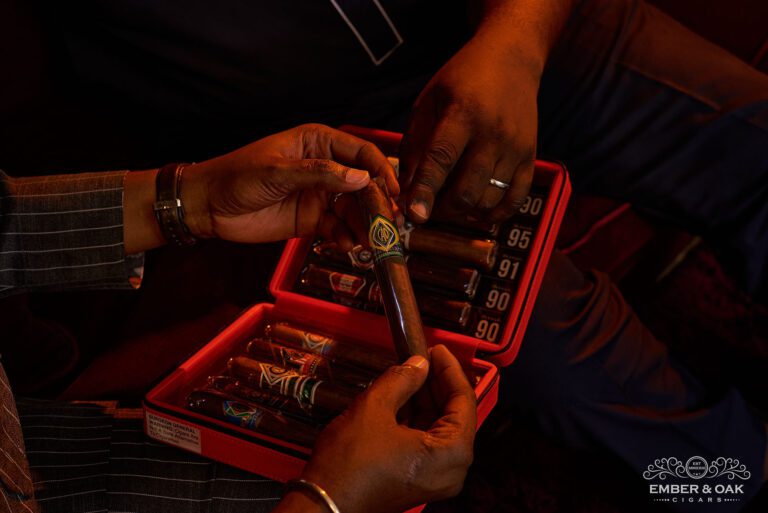
The second offer came three months later, at the closing dinner for a deal we’d spent eighteen months nursing through regulatory hurdles and currency fluctuations. Same cigar. Same refusal. Though this time, I noticed the ritual of it—the deliberate cut, the patient toast of the foot, the first draw held like a secret being whispered into the humid night air. I looked away.
The third offer arrived on a rainy Saturday afternoon in Victoria Island, six months after that. The kind of rain that turns Lagos roads into rivers and traps you in someone’s lounge with nowhere to go. I was in a different headspace. Weary. Curious, perhaps, in a way I couldn’t name. I took the pack of three. Just to be polite, I told myself. I’d give them to someone else.
I smoked all three that weekend.
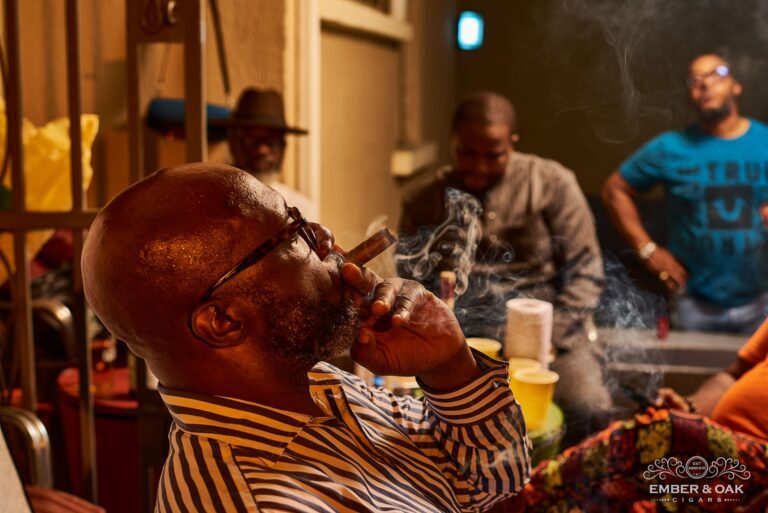
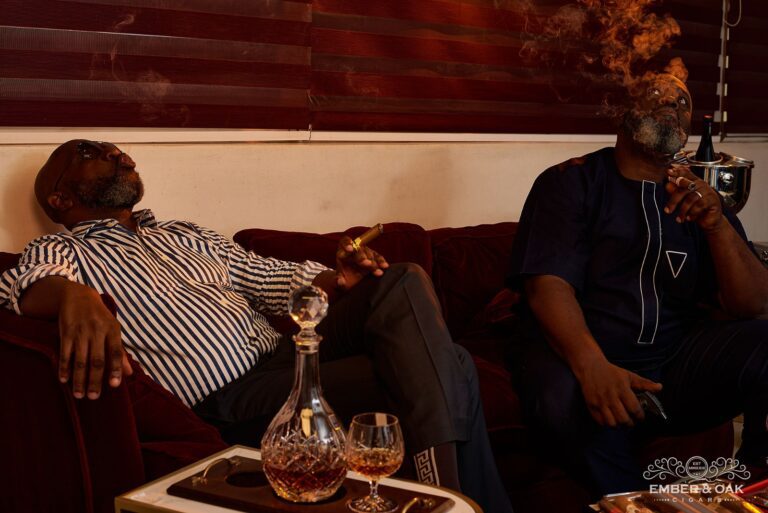
Not in succession like some frantic relapse, but with intention. One Friday evening as the generator hummed and the city lights flickered back to life. One Saturday afternoon beside a stack of books I’d been meaning to read for years. One Sunday morning with strong Nigerian coffee, dark as the oil that built this city. Each one lasted nearly an hour. Each one demanded I slow down. Each one taught me something I hadn’t realized I’d forgotten: the art of not rushing—in a city that never stops.
The Pivot Nobody Saw Coming
Here’s what most people get wrong about cigars in Nigeria, and what I committed to understanding: this isn’t about the optics.
We live in a culture where certain lifestyles are deeply aspirational—the Benz in the Lekki driveway, the membership at Ikoyi Club, the weekend escape to a private beach house in Ilashe. Cigars fit neatly into this tableau: the humidor in the home office, the Instagram post from some rooftop in Eko Atlantic, the lifestyle of it, curated and filtered and utterly hollow.
But beneath that surface lies something far more intoxicating: knowledge as currency.
I threw myself into the deep end. The challenge of authentic sourcing in a market flooded with counterfeits. The science of storage in a climate where humidity swings between 80% and 95% depending on whether it’s the harmattan or the rainy season. Why a cigar that sings in an air-conditioned London lounge can turn bitter and acrid on a Lagos balcony. The logistics of cold-chain shipping across continents, through customs, into the hands of someone who understands that a Cohiba Behike and a “Cohiba” from a street vendor in Havana are not the same thing.
The deeper I went, the clearer my mission became.
In a Nigerian context where the appearance of success often outpaces its substance—where packaging can matter more than product—there exists a powerful opportunity. Not to sell cigars as props for the ‘big man’ image, but to arm aspirational minds with the knowledge that makes the lifestyle meaningful. To transform performance into passion. To turn the curious into the connoisseur.
Because here’s the truth: once you understand why a Partagas D4 tastes of earth and black pepper and slow-burning cedar, once you know the lineage of the seed and the hands that rolled it and the years it slept before surviving Nigerian customs and reaching your humidor—you don’t just smoke it anymore. You commune with it. And that communion is impossible to fake.
The Invitation
This blog is for the curious. The skeptical. The ones who’ve seen the lifestyle posts from Eko Hotel rooftops and wondered if there’s anything real beneath the veneer.
Over the coming weeks, I’ll be pulling back the curtain on an industry built as much on mythology as on agriculture. We’ll explore how to build a proper humidor in a climate that fights you at every turn. We’ll decode the language of flavor for a Nigerian palate raised on suya spice and pepper soup. We’ll discuss the real cost of authenticity versus the danger of the counterfeit market that thrives in our ports. We’ll meet the collectors quietly building cellars in Ikoyi and Banana Island. And we’ll talk about the business of it—because in Nigeria, passion without profit is just an expensive hobby.
But before we go any further, I need to tell you about the phone call I received last Tuesday. The one that came through on a crackling line from a contact I won’t name, somewhere between Lagos and the border. The one that suggested the entire supply chain I’d been studying—the one I’d begun to trust—might be built on something far more fragile, far more dangerous, and far more fascinating than I’d imagined.
The voice on the other end spoke for eleven minutes. I haven’t slept properly since.
That story begins next week.
Until then—what was the moment that made you curious? The one offer you didn’t refuse at a Lagos party, under a generator’s hum, while the city roared around you? Drop it in the comments. I read every single one.
About the Author: A former skeptic turned obsessive researcher, now building something in the space where knowledge meets craftsmanship—right here in Lagos. More on that soon.